
We all know stress is everywhere, and it is so important to organize and create lists of priorities. Surely we all have so much to do that it is hard to keep up, and then the list comes. So today we are going to talk about a to-do list for organizing your day to reduce stress.
I think too much stress comes because we are all over the place, and all the work we need to do piles up. Looking at that, it makes it more and more stressful. So we should stop, even if it is just for a brief moment, and choose what the most important thing is.
To be honest here, I really struggle with lists. I can create lists, but I am not really using them for real. So this post is close to me, maybe more needed for me than other people who are great with it. I am sure many of us struggle with lists and such. Let’s go!
As an Amazon Associate, I earn from qualifying purchases
Your Go-To To-Do List for a Calmer, More Organized Day
Feeling like your day gets away from you? Life can move fast, and stress piles up quickly when things are unorganized. That is why I rely on a clear, realistic to-do list. It keeps little worries in check and helps me actually get more done. Here you will find simple steps and tips for shaping a daily task list that actually works for real life, not just for people with those next-level cool color-coded planners all over Pinterest. Ready to get into it?
Getting Started: Why a To-Do List Eases Stress
How a To-Do List Helps
When my tasks live inside my head, I feel overwhelmed fast. Once I write things out, the chaos starts to clear up. A to-do list works as a quick brain dump, sorting scattered thoughts into a plan and reducing mental clutter. Instead of juggling a dozen things, you check one list and focus on what matters most.
Which Format Should You Use?
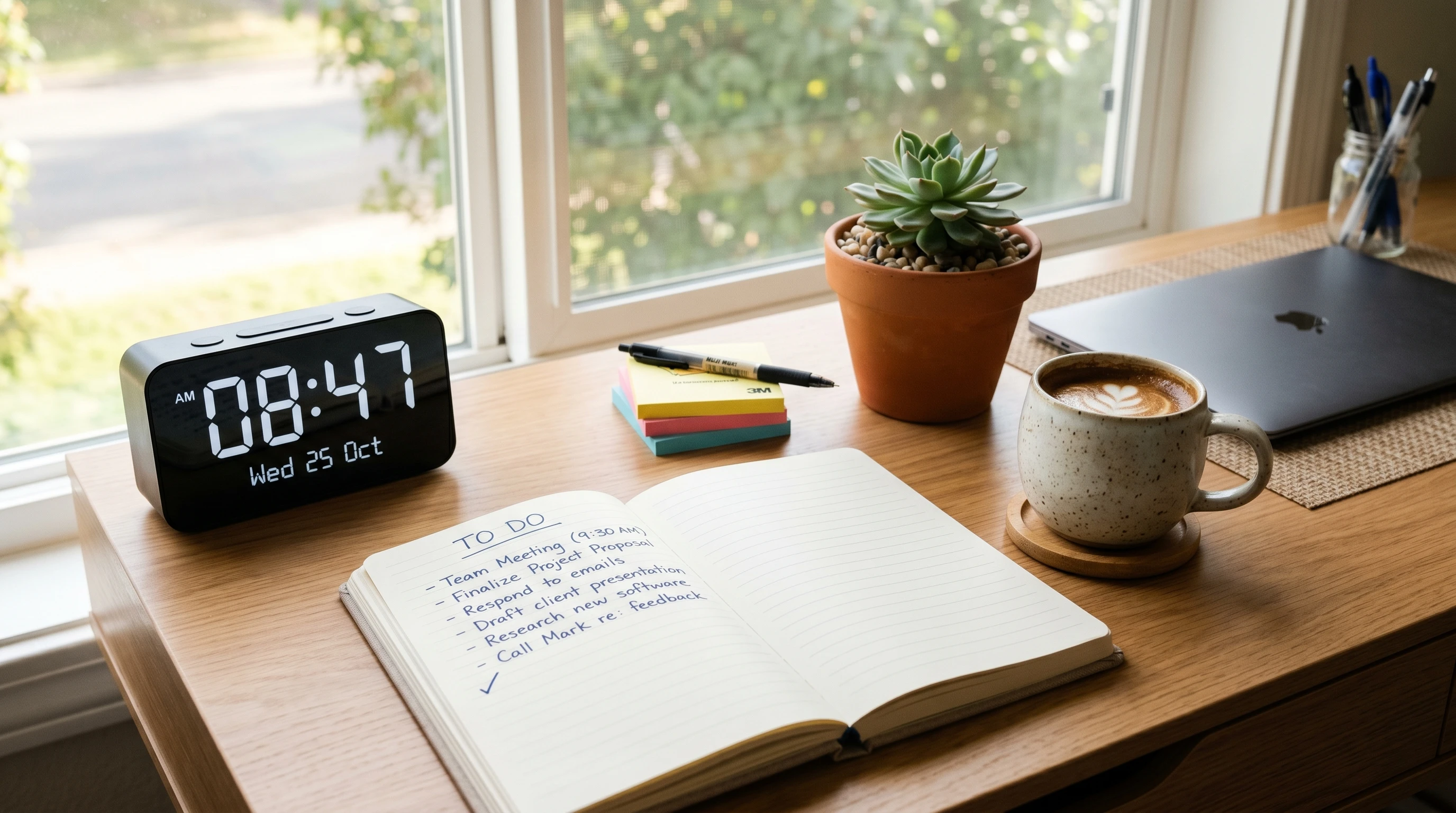
There is no single perfect format. I switch between a paper notebook and a phone app, depending on the day. Sometimes I just write it one lose paper because it seemed important, maybe you just need that. Some people love bullet journals, while others stick with simple sticky notes. The key is finding something you actually want to use. Digital tools like Todoist and Google Keep are especially handy if you need reminders or want to share lists with family or coworkers. If crossing off tasks feels satisfying, a regular notepad can do the trick.
Building a Stress-Reducing Daily To-Do List
Step 1: List Everything on Your Mind
Start by writing down every task, big or small, that is on your mind. Don’t worry about order or importance yet. The goal here is just to get it all out; it doesn’t matter if it is errands, appointments, phone calls, chores, or even setting aside time to listen to your favorite music. You can even add reminders about self-care, so you don’t overlook your well-being.
Step 2: Prioritize with Purpose
If everything feels urgent, nothing gets done. You can break a list into three sections: “Must Do Today,” “Nice to Do,” and “If There is Time.” This keeps me focusing on what really needs attention and helps stop last-minute panic. Sometimes I even star the absolute top priority task. This gives my day some helpful structure.
Step 3: Break Down Big Tasks
Bigger projects often look scary and stressful on a list. Instead, split up tasks like “clean the house” into smaller, manageable steps such as “tidy kitchen counters” or “wipe down bathroom sink.” This lets you check things off faster and gives you some quick wins. Over time, you will see steady progress throughout your day rather than feeling weighed down by big projects.
Step 4: Add Time Estimates
Guessing how long something will take helps stop procrastination. Next to each task, write a rough estimate, like “15 min” or “1 hour.” This process helps you see when you might be overloading yourself and reveals where short tasks fit into open pockets of time.
Step 5: Create Room for Breaks
Building in short breaks between tougher tasks works wonders for stress levels and energy. Something as simple as a five-minute walk or a snack helps you reset and keeps your focus sharp. Ignore breaks, and you will notice your focus going off-track pretty quickly. A well-timed break can make the rest of your afternoon go much smoother.
Do you need a planner? CLICK HERE to choose and get
Tips for Staying on Track All Day
Set Your To-Do List the Night Before
Mornings go so much smoother when your list is ready in advance. Spend ten minutes in the evening planning — this even helps your brain wind down for sleep. Having tomorrow’s plan prepared gives you a calm start to the day.
Check In and Adjust Midday
Life rarely goes exactly according to plan. Around lunchtime, revisit your list and see if anything new cropped up or if a task took longer than you thought. Reprioritize the afternoon’s plan so stress doesn’t sneak in by the end of the day, and don’t forget to swap tasks as needed.
Celebrate Small Wins
Progress is something worth celebrating, even in little ways. Every time you tick something off, give yourself a mini high five or treat. Little celebrations keep motivation high and anxiety low, reminding you that even incremental progress is still moving forward.
Be Okay with Moving Tasks
Some days, surprises just happen. If you don’t finish every task, just send it to tomorrow’s list—no guilt required. Progress is more important than perfection, and your to-do list is a tool, not a rulebook. Allow yourself flexibility so you don’t get discouraged.
Examples of To-Do List Tasks to Try
- Start small: “Make bed,” “drink a glass of water,” or “reply to one email.”
- Add routines: “Take medicine,” “morning stretch,” or “plan dinner.”
- Don’t forget self-care: “Read for ten minutes,” “step outside,” or “call a friend.”
- End of day clean up: “Tidy desk” or “prep tomorrow’s breakfast.”
FAQs: How to Make Your To-Do List Actually Work
What if I have way too many tasks every day?
I focus on three “non-negotiables” per day. Anything else is a bonus. This stops overwhelm and gives each day a sense of accomplishment, even if unexpected stuff shows up.
How detailed should my tasks be?
Details help. Instead of “clean house,” I write “empty trash” or “wipe kitchen table.” It is easier to start and to finish, with clear, bite-sized steps that give you steady momentum.
What is the best app or notebook?
The best tool is the one you will actually use. I have some apps, but I always come back to a plain notepad. Crossing off tasks with a pen just feels satisfying, and sometimes, simple is best. Explore options to figure out what suits you.
Conclusion
Stress is everywhere, as we know it, so it is important to organize your task list to make your days a bit less stressful. For me, lists are great; however, I had a bit of a problem with them. I wrote it, but many things were written that I did not do. It is important to write a list that is manageable.
A good to-do list is much more than a productivity trick; it is a genuine stress-buster, helping you get a feel for the shape of your day. You will probably feel lighter as soon as you put pen to paper or finger to phone. Start small and be kind to yourself, keep things flexible, and don’t forget to celebrate your completed steps. If you are searching for more tips or sample templates, check out resources like Todoist or the Bullet Journal website for examples and inspiration. Remember, it is all about finding what works to make your days calmer, more productive, and less stressful.
What do you think about this article? Do you have any advice or suggestions? Please let us know your thoughts and write in the comment section below.
Meditation is always the best tool for stress relief. CLICK HERE to learn more about it
I would like to hear from you, so please leave me a comment below to let me know if this article helped you.
If you want to know more about ways you can manage stress, please subscribe to this blog.
If you think this article is helpful, please share it.
Thank you! Have a nice day!
Until later
Linda Mo,
Founder and owner of How To Reduce Stress Naturally
I always have good intentions when it comes to creating to do lists and some days I manage this quite well, but there is always something that I leave off on a busy day, and then I forget, or sometimes I forget to look at my to do list and realize a few days later that I have forgotten to do something.
I think I really need to focus and make this a daily habit like brushing my teeth, as it really does take the stress off of yourself when you have everything you must do written down and then you tick off as you go along.
I have tried apps, but find that my pen and paper diary seems to work best for me. Not sure how others feel about this?
Hey, Michel! Thanks! For me, paper always feels better for to-do lists. About keeping up with lists, I have a similar issue, forgetting and such. They are supposed to help keep you grounded on some level. Honestly, I think this is a work in progress and not always easy, it is so good to make this a habit. Then it will be easy, and this becomes another tool for keeping stress at bay.