B vitamins are great for times of stress support; they help with stress management and our overall health. Today, we are going to talk more about vitamin B1 and B1 vitamin intake for stress relief.
We all know we live in times where stress is everywhere we look. For me, it seems stress is more than just stress; it includes anxiety, sleep problems, worries, and headaches that could come out of nowhere.
Daily Vitamin B1 Intake for Stress Reduction: FAQ & Guide
If you are curious about how vitamin B1 (thiamine) fits into your daily routine, especially for stress management, you’re in the right place. I have got practical info, tips, and straightforward answers on vitamin B1 intake, foods that pack a punch, and ways this nutrient can help with stress. If you have questions beyond what is here, you can always reach out for more info.
Vitamin B1 Basics
What is vitamin B1?
Vitamin B1, also called thiamine, is one of the B vitamins that help your body use carbs for energy. It keeps your nervous system working the way it should. Stress puts extra demands on your brain and nerves, so thiamine is pretty handy for supporting your body during those busy or overwhelming times. Besides energy production, thiamine is crucial for muscle function, digestion, and even heart health. If you are cutting out processed foods, remember that you might need to pay a bit more attention to your thiamine intake.
How does vitamin B1 help with stress?
Thiamine supports your nerves and helps your body make mood-related chemicals like serotonin and dopamine. When I am feeling extra stressed out, keeping up with my B1 intake helps my mind stay clearer and helps avoid fatigue or brain fog. Without enough thiamine, people can feel tired, irritable, or anxious, which isn’t a fun combo when you want to feel your best. B1 also helps turn the food you eat into energy your body can use, giving you that extra spark to get through stressful days.
Daily Recommendations & Dosing
How much vitamin B1 should I get every day?
For most healthy adults, the recommended daily amount (RDA) of thiamine is:
- Men (19+): 1.2 mg per day
- Women (19+): 1.1 mg per day
- Pregnant or breastfeeding: Talk to your doctor, but requirements usually go up a bit (around 1.4 mg per day).
You don’t need massive doses; a little goes a long way. If you are under extra stress, recovering from illness, or have specific health needs, your doctor might suggest a slightly higher intake, but most people get what they need from food if their diet includes a good mix of whole foods. People who drink alcohol regularly may also need more thiamine, as alcohol can interfere with absorption and use.
Can you get too much vitamin B1?
Thiamine is a water-soluble vitamin, so your body gets rid of extra amounts through urine. That makes overdosing pretty rare. Still, it is best not to take huge amounts of supplements unless recommended by your doctor. Serious side effects are uncommon, but too much of anything isn’t always better.
If you want to get a vitamin B1 supplement, CLICK HERE to choose and get
Sources of Vitamin B1
Which foods have vitamin B1?
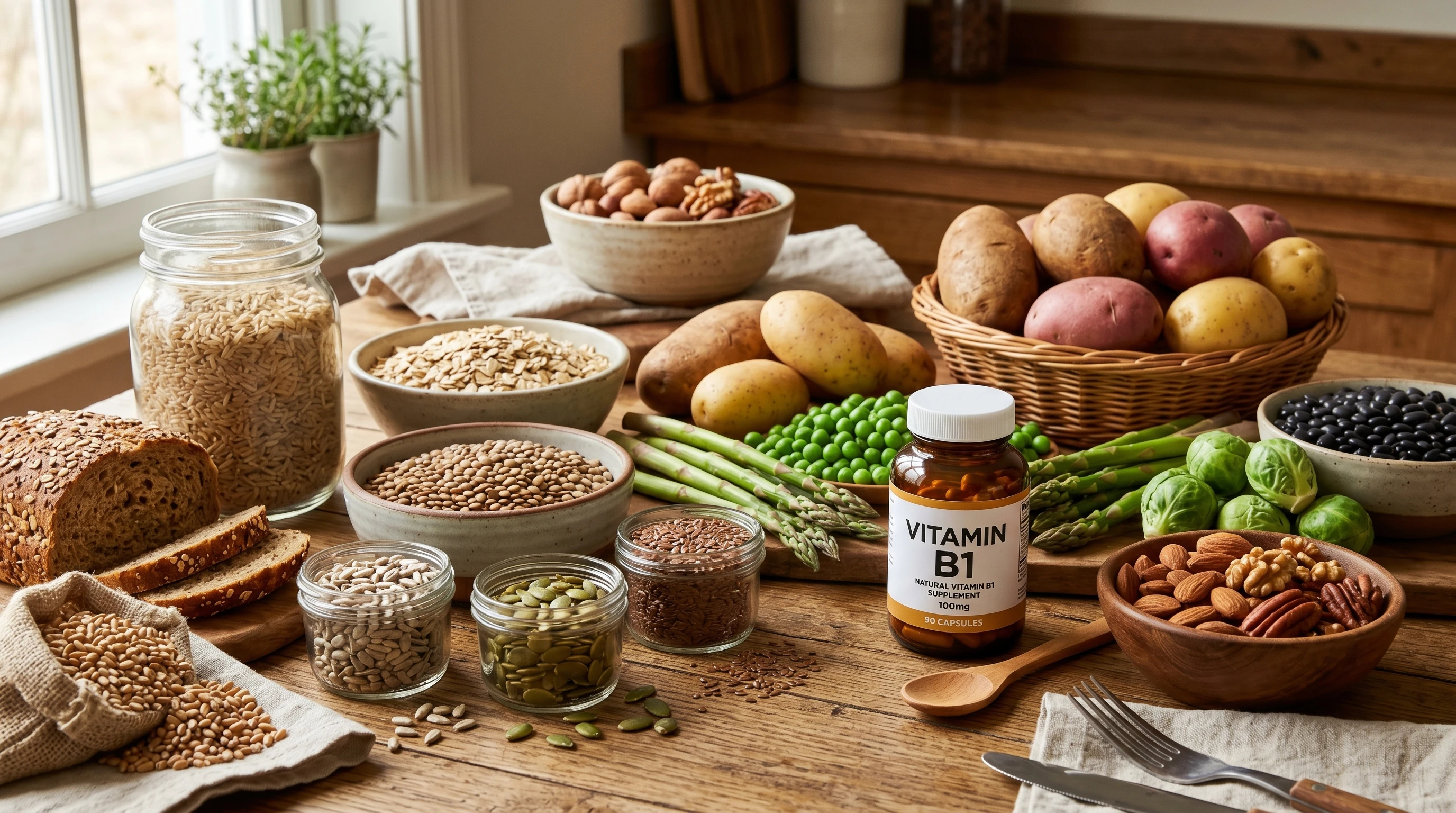
You will find thiamine in all sorts of everyday foods. Some foods I usually add to my meals to boost my B1 intake include:
- Whole grains (brown rice, oats, barley)
- Fortified breakfast cereals
- Pork and lean meats
- Nuts and seeds (sunflower seeds are a standout)
- Legumes like black beans, lentils, and peas
- Potatoes
A bowl of oatmeal with sunflower seeds or a stir fry with brown rice and pork can easily meet your daily needs. If you are vegetarian or vegan, plant-based foods like beans and nuts are great to keep on hand. Try switching things up by tossing chickpeas on salads, snacking on almonds, or adding lentils to stews for a simple thiamine boost.
Is it better to get B1 from food or supplements?
Most people do fine getting their thiamine from food. Supplements can be handy if you have a restricted diet, a medical condition (like Crohn’s disease), or special needs related to pregnancy. Before you start a B complex or B1 supplement, I always recommend checking with a doctor to get advice fit for your situation. Keep in mind that excessive supplement use isn’t necessary for everyone, but it may be needed if your diet is lacking variety or if your absorption is affected by a digestive-related condition.
Vitamin B1 & Stress FAQs
Can low B1 really make stress worse?
It is not magic, but many studies show that people low in thiamine often feel more anxious, irritable, or mentally drained. B1 plays a part in nerve function and mood regulation, so being low can definitely make stressful days feel even tougher. If you often feel foggy or unusually tired, it is worth checking your diet for gaps. Stress and poor nutrition can go hand in hand, so don’t hesitate to track down professional support if you need help adjusting your habits.
Should I adjust my B1 intake during stressful times?
During tough work weeks or exams, try to eat more foods with B vitamins in general. While most people don’t need a lot more than the regular recommendation, including a bit extra in your meals during high-stress periods can be beneficial, especially if you are eating less or not as balanced as usual. If stress is impacting your health, your doctor may recommend bloodwork to check your B vitamin status. If you are an athlete, under chronic stress, or recovering from illness, make sure your overall nutrition (including B1) is normal.
What signs point to low thiamine?
Some signs of low thiamine include:
- Tiredness or weakness
- Irritability or mood swings
- Shortterm memory problems
- Loss of appetite
- Tingling sensations in hands or feet
If you notice several of these, talking with your doctor is a smart move. Low thiamine can creep up if you are undernourished, limit certain food groups, or have a digestive problem.
Getting Support & Further Questions
Where can I get personalized guidance?
If you need specific advice on vitamin B1 or balancing your nutrition to help with stress, consulting a registered dietitian or doctor is a great step. They can check for any deficiencies, offer food suggestions, and help you build a routine that keeps your stress and mood in check. Don’t hesitate to ask your doctor if you are unsure—you deserve support for your mental and physical health.
Conclusion
Daily B1 vitamin intake is important via food and supplements if needed. Not always will vitamins from food be enough and well absorbed in your body. Usually, vitamin supplements come to the rescue. Either way, you need to remember to ask your doctor about needed supplements and what he would recommend.
Personally, after a blood test and talk with a doctor, I would get a vitamin B1 supplement. Before, I was a bit skeptical about the need for it. But now, a vitamin B1 supplement seems to be what I need, and most likely it will support me and my health against stress caused issue. Will tell you all about it in some new posts about Vitamin B1 and its supplements.
Still have questions about vitamin B1, stress, or nutrition? Feel free to send in your questions here. I am happy to give tips, info, and resources to help make your daily routine easier and healthier.
What do you think about this article? Do you have any advice or suggestions? Please let us know your thoughts and write in the comment section below.
Do you want to get a vitamin B1 supplement? CLICK HERE to choose and get
Meditation is always the best tool for stress relief. CLICK HERE to learn more about it
I would like to hear from you, so please leave me a comment below to let me know if this article helped you.
If you want to know more about ways you can manage stress, please subscribe to this blog.
If you think this article is helpful, please share it.
Thank you! Have a nice day!
Until later
Linda Mo,
Founder and owner of How To Reduce Stress Naturally