Stress seems to impact our lives daily, and it disturbs our well-being; that is, it is more about chronic stress. Stress is not a bad thing in general, but chronic and never-ending stress is. Painting and other creative activities are great for relaxation and also stress relief. Today we are going to talk about how to overcome creative block when painting for relaxation. Let’s see and explore this topic! Painting and creative activities are always a great way for relaxation, and stress can just melt away.
As an Amazon Associate, I earn from qualifying purchases
Painting can be one of the simplest and most enjoyable ways to unwind and deal with stress. I find that putting paint to canvas (or paper) lets my mind relax after a busy day, but running into creative blocks can really take the fun out of the process. If painting is your go-to for relaxation and you are stuck, there are some practical ways to bring back that easygoing, enjoyable vibe.
Creative blocks pop up for all sorts of reasons, like feeling tired, feeling pressured to be perfect, or simply drawing a blank. No matter the cause, figuring out a way around them means you get back to enjoying painting as the chilled-out escape it should be. Here is everything I use to keep creativity flowing and stay relaxed while painting.
Spot What Is Causing Your Creative Block
Creative blocks aren’t always about being “out of ideas.” Stress from daily life, the pressure to make something amazing, or just being in a funk can freeze up inspiration. The first step is figuring out what is getting in the way, since how you deal with the block depends on the cause.
Common Triggers to Look For:
- Perfectionism, when anything less than perfect doesn’t feel worth painting
- Burnout from putting in too much effort to make “serious” art
- Comparing your work to artists you spot online
- Lack of sleep, not enough breaks, or other life stressors
- Getting bored of painting the same subjects or styles every time
Identifying the main issue helps you choose what actually works to reset your creativity. This isn’t just for one painting, but for keeping your art time stress-free in the long run. Sometimes it helps to jot down what is bothering you before you start painting; being aware of how you are feeling can quickly clue you in to what is really causing that creative block.
Mix It Up: Focus on Relaxation, Not Results
Painting for relaxation works best when you drop the need to finish a masterpiece. The real enjoyment comes when your focus is on the process: playing with colors, feeling the brush move, or seeing how paint flows on the paper. Even quick doodles or loose swaths of color feel satisfying when you let yourself have fun. The less you care about the end result, the easier it is to let loose and get painting again.
Easy Ways to Rediscover the Enjoyment:
- Set a timer and paint for 10-15 minutes with zero expectations
- Try abstract painting or big color fields; there are no rules
- Use your nondominant hand. This instantly removes the pressure to make it perfect
Give yourself permission to make “bad” art. You might be surprised how freeing it is to let go, and how quickly inspiration returns once you’re not worried about making something flawless. Many artists find their best ideas spring up when they are just following intuition and playing without expectation.
Create a Cozy Painting Space
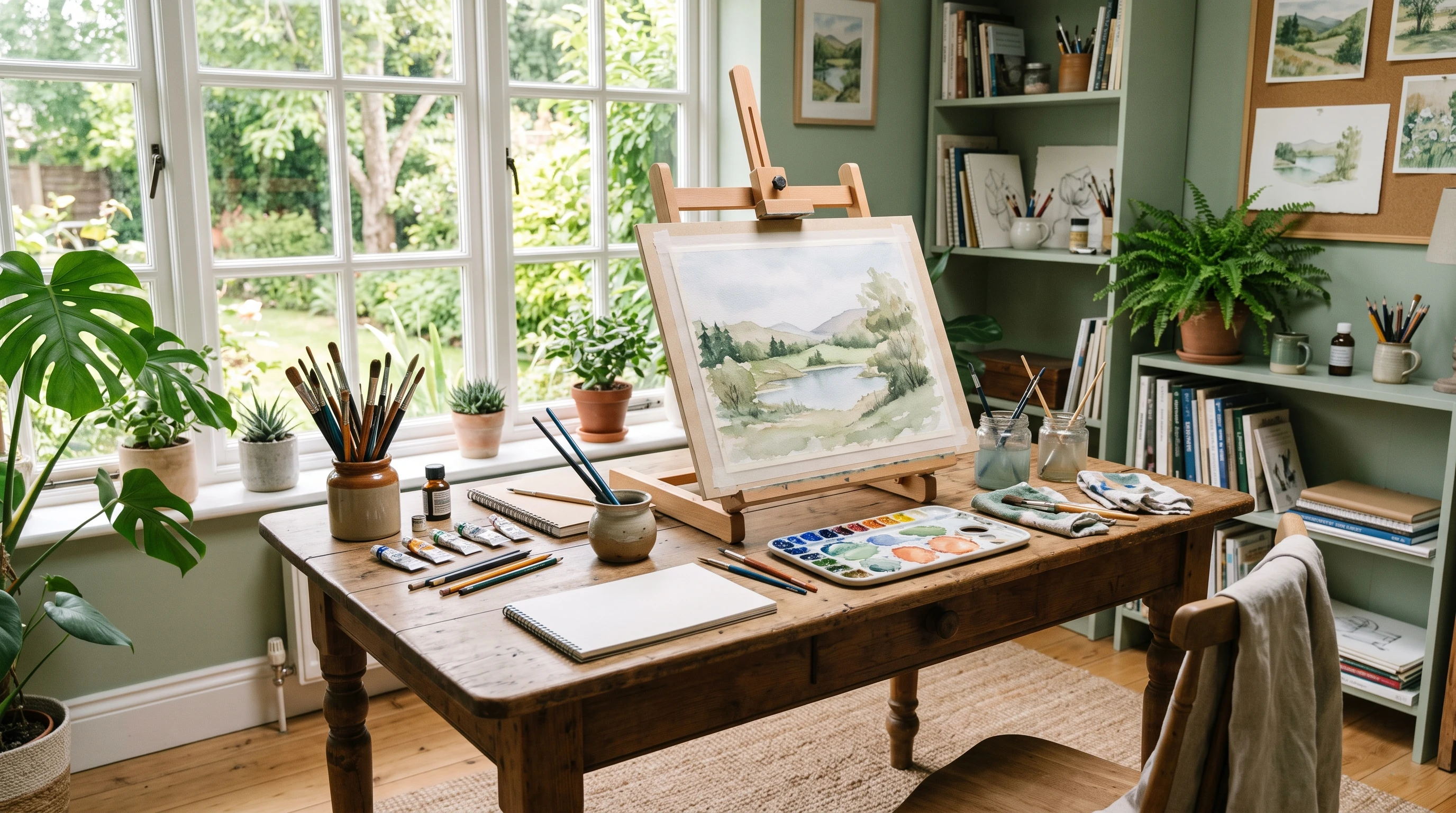
Your environment has a huge impact on your mood and state of mind. A cluttered or stressful setup can make painting feel like a chore. Setting up your work area to feel comfortable, even if it is just the kitchen table, helps you relax and look forward to painting again.
Tips for a Relaxing Painting Environment:
- Clear your workspace so only paints and paper are out
- Light a candle or add calming scents
- Play chill music or soothing nature sounds in the background
- Get comfortable with soft lighting, a supportive chair, and maybe a warm drink
A peaceful setup really helps lower tension and opens your mind to new ideas. When your space feels relaxing, painting becomes much more inviting. Consider rearranging your supplies for a fresh feel, or give your area a quick tidy-up before you start—it can make a noticeable difference.
Get Inspired Without Overloading Yourself
Looking at art online or flipping through a book can easily spark ideas, but too much time scrolling or comparing can have the opposite effect. Instead, try choosing just a few painting prompts or images. Sometimes, even changing materials (like swapping acrylics for watercolors or markers) is enough to get you started again.
Find Inspiration Without Pressure:
- Pick a random photo from your phone and paint a simple version
- Choose one color to use in an entire mini painting
- Scroll a Pinterest board with relaxing landscapes or abstract pieces
- Go for a stroll in a park or sit by a window; sketch whatever catches your attention
The key is to seek out images or prompts that feel welcoming, not overwhelming. Inspiration really sticks when it gives you the urge to play, rather than making you compare or feel behind. Nature, daily objects, or childhood memories can also be great sources—sometimes the simplest ideas are best.
Try Playful Painting Exercises
Jumping back in with low-pressure, fun exercises takes your mind off the block. Quick warm-up sketches, mixing color swatches, or even silly creative challenges can lighten your mood and make painting feel easy again.
Simple Exercises I Use to Beat Blocks:
- Paint random shapes and turn them into imaginary creatures or scenes
- Mix paints to make swatch cards, seeing how different colors interact
- Set a silly rule, like only using three brush strokes per shape
- Layer colors with no plan; just see what happens on the page
The more painting feels like playtime, the faster frustration fades, and ideas start showing up. Often, a page full of random doodles ends up giving birth to a bigger project later on. Try tacking a few playful paintings to your wall for an extra confidence boost.
Let Movement and Breath Loosen Things Up
When your brain feels stuck, or your body is tense, a short break for a walk or deep breathing helps break the cycle. Creative energy can get trapped when you stay seated worrying about each brushstroke. Stand up, stretch, or even sway to music for just a few minutes and notice how your mood shifts.
Quick Reset Ideas:
- Step away from your painting area for five minutes
- Stretch your shoulders and neck to relax physical tension
- Paint to music, letting the beat guide your brush movements
- Focus on mindful breathing while you mix paint or clean your brushes
Coming back to your painting with a calm body and mind often makes creative blocks easier to shake off. Bonus: movement brings fresh oxygen to your brain, which is a big plus for creativity!
Build a Relaxing Painting Routine
Painting as a relaxation tool works best as a regular break, not a deadline. Try making painting a flexible habit, fitting it into your life without worrying about results. Don’t wait for the perfect inspiration—schedule casual painting time once or twice a week instead.
How to Make It a Habit:
- Pick a time of day you are usually calm, like after dinner or before bed
- Keep your paints, brushes, and paper handy so you can start quickly
- Let yourself paint just for relaxation; no finished product needed
- Create a small ritual, such as playing a favorite playlist or brewing tea before you begin
Turning painting into a chill, laid-back habit helps your brain link art to unwinding. This makes it easier to come back to when stress builds, or creative blocks appear. Over time, you might even find painting becomes your favorite way to press pause and reset your mood.
Common Questions About Creative Blocks and Relaxation
What if I still feel blocked after trying everything?
It’s normal for blocks to linger now and then. Don’t push yourself. Tidy up your supplies, take a break, and try again on another day. Sometimes, just giving things some space does the trick.
Should I take a break from painting if I feel stressed?
- Yes, absolutely. Stepping away is often really helpful. Take up a different hobby, step outside for fresh air, or do a simple activity like doodling or coloring instead.
How do I know if painting helps me relax?
Check if you feel calmer and less tense after painting, even if the result isn’t perfect. If painting starts to feel stressful, ease up and try one of the playful exercises listed earlier. Keep it about relaxation first. If it doesn’t help, that’s your cue to try something else for the moment.
Next Steps for Easygoing, Stress-Free Painting
Creative blocks don’t need to stop you from painting or enjoying the calm that comes with it. Spot what is behind your block, mix up your routine, and ease your expectations to let art work as a stress reliever again. Give yourself permission to paint just for you, with no pressure or judgment.
Your Relaxed Painting Plan:
- Set up a comfortable art space, even for a short session
- Pick one playful painting prompt or try an exercise this week
- Notice how you feel after painting—and keep the goal about relaxation above everything else
If you have a favorite method for overcoming creative blocks while painting, I would love to hear about it! Share your relaxed painting tips to help fellow artists find more joy in their own art adventure.