It is important to know how to create a safe meditation space at home, and today we are going to talk about that. Meditation is one great way to reduce the stress you are feeling. Sometimes we just don’t have the perfect place to do it, and we also make excuses.
Now it is time to stop and try to live our best life and engage in meditation that could make us calmer, relaxed, and more ready to deal with stress coming our way. Let’s see!
Finding a little corner of calm at home can make a huge difference when dealing with stress, anxiety, or just everyday chaos. Having a safe meditation space, somewhere that feels peaceful and distraction-free, makes it so much easier to build a meditation habit and recharge mentally. It is not about turning your home into a yoga studio; even a small, cozy nook will do the trick.
I have put together some tips that help me set up a space where I can truly relax, unwind, and get into the meditation zone without any hassle. If you want your home to feel more like a sanctuary and less like a source of stress, this guide is for you. Creating a special space can also give your daily routine a serious boost, making mindfulness and peace more accessible, even on the busiest days.
Meditation is great for relaxation and stress relief. CLICK HERE to learn more about it
Step 1: Identify Your Meditation Needs and Goals
Before picking out pillows or lighting candles, I stop and think about what I need out of a meditation space. This makes the whole process feel more personal and helps keep my setup simple and focused. Being intentional with this step can help you get the most out of your practice and avoid cluttering your space with unnecessary items.
Questions Worth Considering:
- Why do I want a meditation space? Stress relief, focus, sleep, or something else?
- How much space do I actually have to work with?
- Do I prefer quiet, music, or nature sounds during meditation?
- What time of day am I most likely to use my space?
Example Meditation Goals:
- Create a calm area to separate work from downtime.
- Make stress reduction easier as part of my daily routine.
- Encourage mindfulness for better sleep or focus.
I have found that being clear about my reasons makes the space way more inviting, and I am much more likely to use it. Keep in mind, when you come back to this spot day after day, it can become an anchor for quiet and relaxation. Don’t worry, I also have this issue about separating work from downtime. It can happen if you work from home. All this is why this topic is important to me.
Step 2: Choose the Right Location
I don’t have a spare room for meditation, and honestly, most people don’t. Even a spare corner or a section of a bedroom or living room can work. The point is finding a spot that feels safe, private, and unlikely to be interrupted. Sometimes, this means shifting around furniture or getting creative with the layout of your current space to carve out an area just for you.
Location Tips:
- Pick a spot away from heavy foot traffic (hallways, kitchens, or main entryways aren’t great).
- Look for an area with soft, natural light. If that is not available, use warm, gentle lamps.
- If noise is a problem, choose a spot where you can close the door or hang a curtain for privacy.
- For shared spaces, marking your area with a rug or cushion signals that it is for meditation.
Don’t stress about size. Even a tiny spot works if it feels calm and cozy to you. Remember, the space should make you feel relaxed from the moment you step in, no matter how small it is.
Step 3: Remove Distractions and Ensure Safety
Nothing snaps me out of meditation faster than a ringing phone or a pile of laundry in the corner. I put my phone on silent and clear away anything that grabs my attention. Safety is important, too, so I make sure there is nothing I can trip over when my eyes are closed or dim lighting is used. A hazard-free environment can make a surprising difference in helping you let go of anxiety and focus on your practice.
Ways to Cut Down on Distractions:
- Turn off notifications and alarms on devices.
- Keep pets and kids out (if possible) while you meditate. You can put a sign on the door for housemates.
- Decluttering, even just tidying up a few things, can help calm my mind and make the space feel welcoming.
- Remove cords, loose rugs, and anything that might create a tripping hazard or feel unsafe, especially if you plan to meditate with eyes closed.
Feeling physically safe makes me more likely to settle in and really let go of stress. If your mind feels at ease, your body will follow, making meditation much more effective.
Step 4: Set Up a Comfortable Base
Meditation isn’t much fun if I am squirming around on a hard floor or sitting on something uncomfortable. Comfort really counts, especially if I want my body to relax while I focus on my breath. Allow yourself a little time to test different seating options to figure out what supports your posture best.
Options for a Cozy Meditation Base:
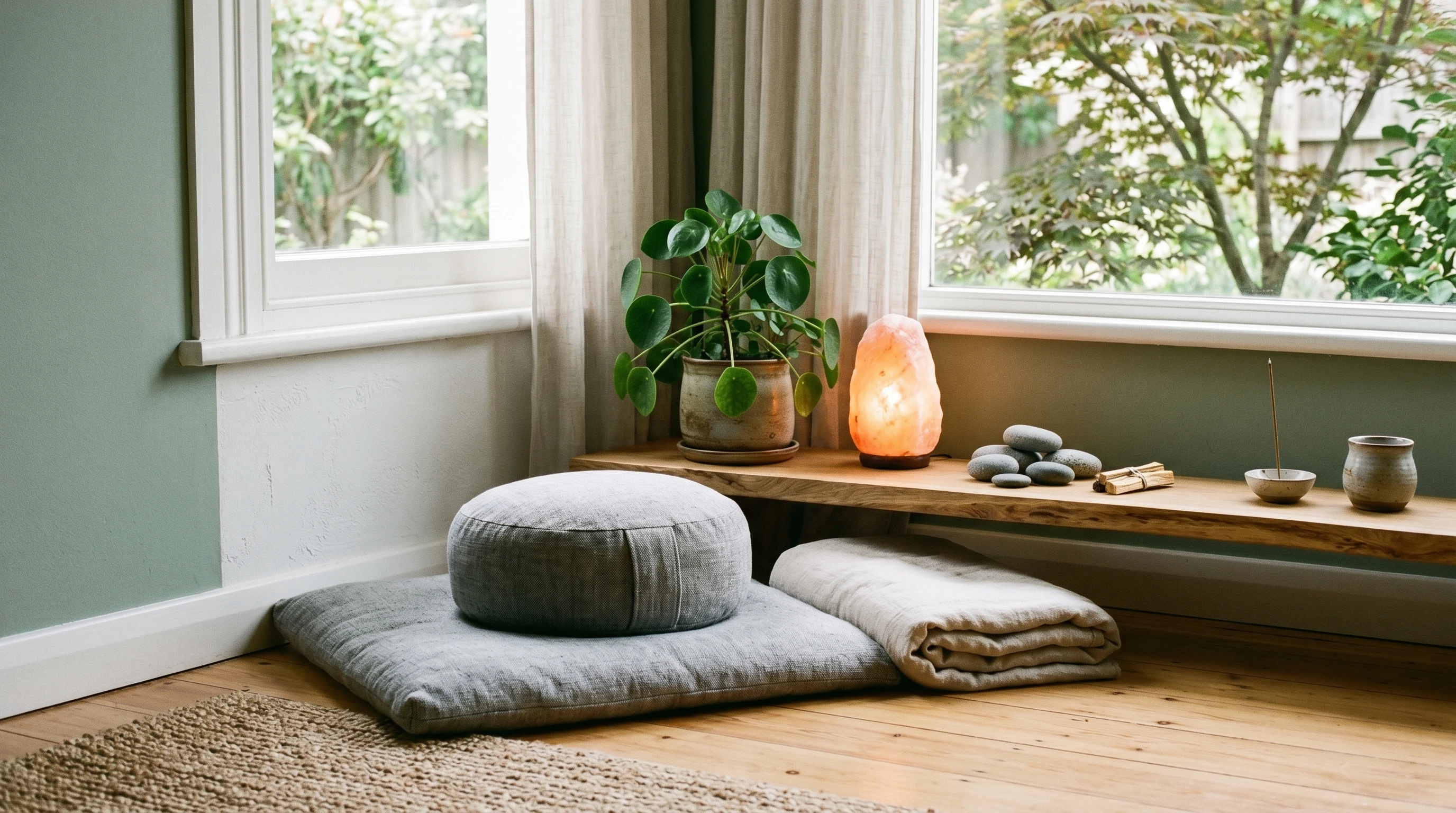
- Cushions or pillows, zafu or standard couch pillows work fine.
- A soft rug or yoga mat for extra padding.
- Blanket or throw for colder days or extra comfort.
- Chairs with straight backs, if sitting on the floor isn’t practical.
Experiment with what feels good to you. My setup is usually just a folded blanket and a floor cushion; nothing fancy, just soft and stable. You might find that changing up your base now and then helps keep things fresh and supports longer sessions.
Step 5: Adjust Lighting and Ambience
Lighting can totally change the vibe of a meditation space. I try to make sure my area is filled with gentle, calming light, bright enough to feel awake but soft enough to set a relaxed mood. You will be surprised how much lighting affects your energy and focus during meditation.
Ideas for Cozy Ambience:
- Use battery candles or salt lamps for a soft glow.
- Let in natural sunlight if possible; otherwise, use warm-toned bulbs.
- Consider soft music, nature sounds, or white noise to block out everyday background noise.
Personal touches like a favorite blanket or even a diffuser with a calming scent (lavender is my favorite) make the space feel extra welcoming. Some days, I will bring in flowers or hang a calming piece of art to add some eye-catching detail and set the mood.
Step 6: Add Mindful Touches and Personal Elements
A few thoughtful details help me shift gears into meditation mode. I pick items that make me feel safe, grounded, and calm.
- Plants for a touch of nature and fresher air.
- A bowl of smooth stones or crystals, if you are into tactile objects.
- Simple artwork or a photo that helps you focus or brings you peace.
- Favorite books, a gratitude journal, or affirmation cards to set intentions before starting.
I am careful not to overload my space. Just one or two items are usually enough to make it feel personal. If you try too many things, it can start feeling cluttered, which makes it harder to relax. Sometimes, I will swap items out based on the season or how I am feeling, which keeps the area feeling new and inviting.
Step 7: Build a Consistent Practice in Your Space
Setting up a safe meditation space is the first step. Making it a regular habit is where the real benefits show up. I find that fitting meditation into my daily routine makes stress melt away more quickly, and my mood and focus steadily improve. Your space becomes more meaningful every time you return and spend a few quiet minutes just for yourself.
How to Stay Consistent:
- Setting a regular time each day, even five minutes after waking up or before bed, is helpful.
- Keep your space ready, leave cushions out, and a candle nearby to save setup time.
- Pair meditation with another habit, like tea or journaling.
- Be flexible with your space! Sometimes I move my cushion to a quieter room if I need a switch-up.
If I skip a day, there is no guilt involved. The important thing is showing up when I can and letting my meditation space be a judgment-free zone. Tracking your meditation streak with a journal or app can also help keep you motivated.
Common Questions & Troubleshooting
What if I don’t have much space?
Even a single corner of a bedroom or a spot by a window can become your meditation area. Some people even meditate in closets during busy days. Sometimes it is just needed to find peaceful moment for yourself. Just keep it cozy and distraction-free. As long as the area feels inviting to you, you are set.
I live with others. How can I avoid interruptions?
- Let those around you know when you need quiet time.
- Use headphones for calming sounds if outside noise is a problem.
- Try meditation when your housemates are out or asleep, if possible.
Do I need special equipment?
Nope! While things like cushions and candles are nice, they are not required. Comfort and a safe, quiet space matter much more than fancy gear. Some people even meditate standing or lying down if sitting isn’t comfortable.
Simple Steps to Get Started Now
Bringing a meditation space into your home is about making it easier to pause, reset, and deal with stress calmly. Don’t wait for the “perfect” setup; just start with what you’ve got, and add little comforts as you go. The most important thing is creating an area that welcomes you back day after day.
Quick Action List:
- Pick your meditation spot and clear any clutter today.
- Add a cozy base: cushion, rug, or blanket.
- Personalize it with one or two calm, meaningful items.
- Promise yourself five calm minutes to try it out and see how you feel!
If you create a meditation nook or try out these tips, I would love to hear how it goes! Share your ideas or questions. It is always great to connect over ways to bring more peace into our daily lives. Remember, your personal meditation corner is all about reducing stress, so keep it simple, comfortable, and truly yours. Over time, you will likely notice you look forward to those quiet minutes more than you expected, and that little spot in your home can become your favorite retreat from the daily grind.
Conclusion
Surely now you see how important it is to create a safe meditation space at home. Meditation is great for relaxation and stress relief too. Sometimes we need an inviting place to start our practice.
What do you think about this article? Do you have any advice or suggestions? Please let us know your thoughts and write in the comment section below.
Meditation is one of the best choices for stress relief. CLICK HERE to learn more about it
I would like to hear from you, so please leave me a comment below to let me know if this article helped you.
If you want to know more about ways you can manage stress, please subscribe to this blog.
If you think this article is helpful, please share it.
Thank you! Have a nice day! Until later
Linda Mo
Founder and owner of How To Reduce Stress Naturally